

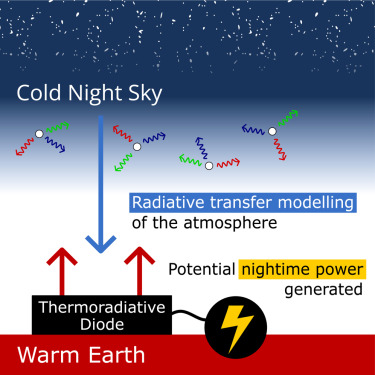
Thermoradiative diodes operate in reverse to typical solar cells by generating electricity through the emission of infrared light into colder surroundings, rather than absorbing photons from a hot source. Operating best at night, these devices leverage the temperature difference between the warm Earth and the cold space to produce a, currently small, amount of electrical power
“Infrared solar panels” or “anti-solar” technology, developed by researchers at Stanford University and UNSW Sydney, produce electricity at night by capturing infrared heat radiating from the Earth toward space, not by sunlight.
These thermoradiative diodes operate in reverse to typical solar cells, providing a low-power, constant energy source during darkness